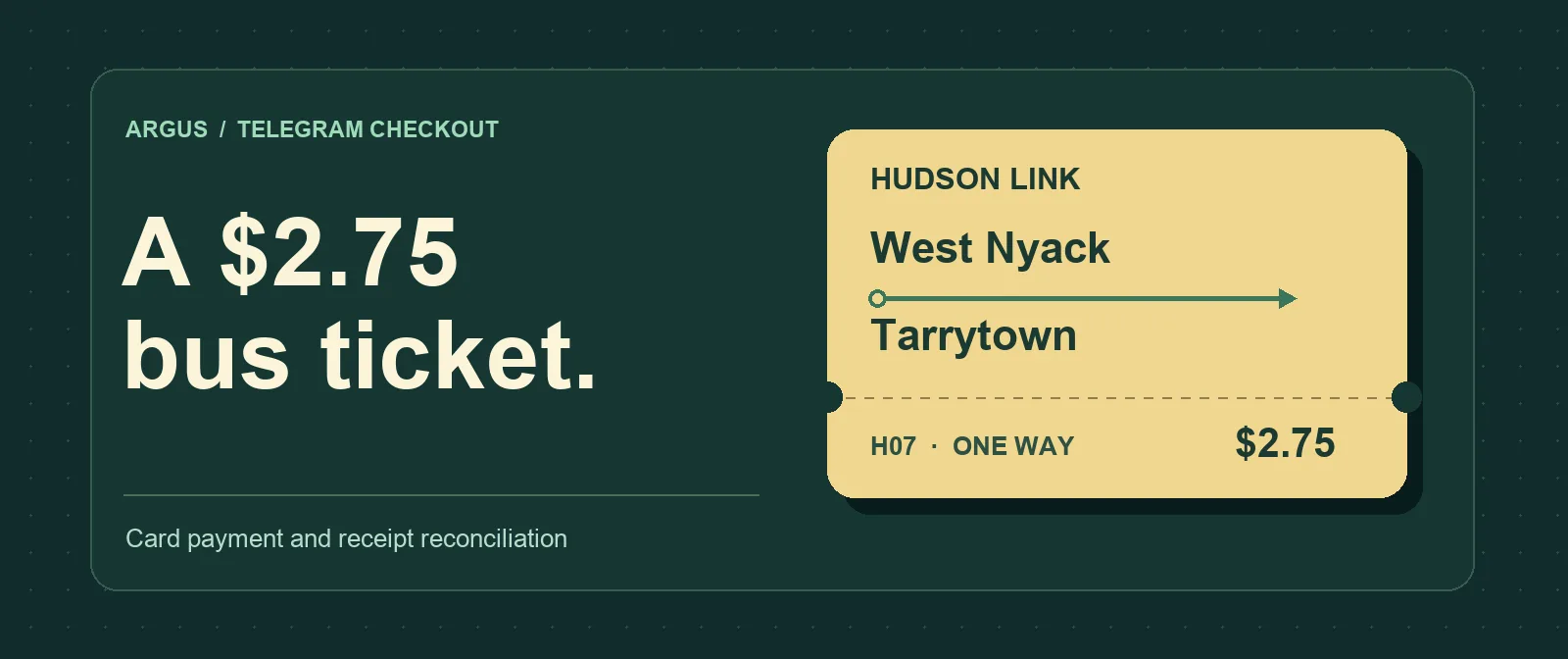
At 13:15, I approved a $2.75 bus ticket in Telegram. A minute later, my AI agent, ARGUS, sent me a PDF for Hudson Link’s H07 route from West Nyack to Tarrytown. I opened it and saw the boarding barcode. Then ARGUS reported that it still hadn’t matched the charge to the carrier’s receipt.
That left an awkward question. If I ask ARGUS to check again, will it look up my ticket or buy me another one?
One tap to buy the ticket
I used /buy_hudson in a private chat. ARGUS asked for the passenger’s first name and surname, showed the route and total, and waited. I tapped Confirm purchase. An isolated Chromium session filled the carrier’s checkout using Cybersource’s hosted card fields. The browser got a short-lived payment token and submitted one order. ARGUS sent the resulting ticket PDF back to the same chat. Cybersource Microform
There were two payments in the experiment. The day before the ticket purchase, an operator used ARGUS’s x402 client to issue a $5 prepaid card from Laso. That payment was 5 USDC on Base. Buying the $2.75 ticket used that card at Hudson Link’s ordinary USD checkout. The ticket charge appears in the card activity. Laso card guide · Base transaction for card issuance
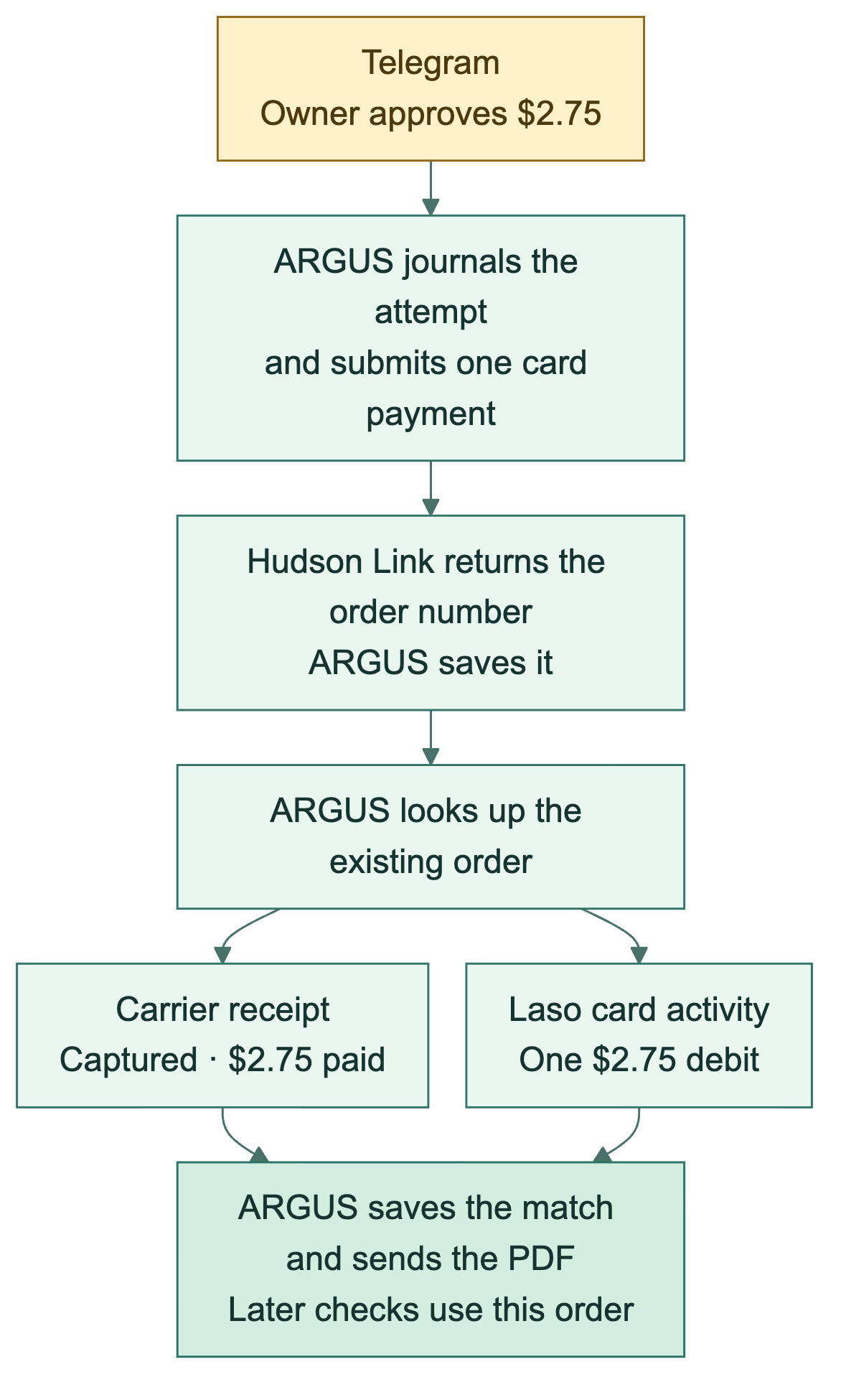
The checkout now saves the order number as it arrives. On the original run, the PDF reached Telegram before the receipt check was complete. Mermaid source
The receipt was right. The amount was a string.
Laso sent the amount back as "2.75". The first matcher skipped it because it expected a JSON number. The purchase had gone through. Our code had lost track of one piece of evidence.
The fix parses either representation as integer cents before comparing it with the approved amount. This reduced example handles unsigned decimal amounts and runs on Node.js 22 with no dependencies. The production check also matches the merchant and card reference.
function amountInCents(value) {
  if (typeof value === "number") {
    value = String(value)
  }
  if (typeof value !== "string") {
    return
  }
  const money =
    /^(\d+)(?:\.(\d{1,2}))?$/
  const match = money.exec(value)
  if (!match) return

  const fraction = match[2] ?? ""
  const digits =
    match[1] + fraction.padEnd(2, "0")
  const cents = Number(digits)
  if (Number.isSafeInteger(cents)) {
    return cents
  }
}

console.assert(
  amountInCents("2.75") === 275
)
console.assert(
  amountInCents(2.75) === 275
)
console.assert(
  amountInCents("2.751") === undefined
)
A second check on the original order
We linked the older journal entry to the order using the original ticket link and verified that the order’s ticket reference matched the PDF sent to Telegram. ARGUS fetched the order JSON and receipt PDF from Coach USA with two GET requests. The receipt said Captured, with $2.75 paid and the expected card suffix.
On the issuer side, Laso showed one new matching debit for $2.75. Available funds moved from $5.00 to $2.25. ARGUS saved the order number, a SHA-256 digest of the receipt, and the reconciliation result. A repeated check returned the saved result for the same purchase. No second order was sent. Laso’s card activity did not expose final settlement status, so the evidence here is a captured merchant receipt and a matching issuer debit. How Laso reports card authorizations
For a new purchase, ARGUS records the payment attempt before it submits the order and stores the merchant order number as soon as it has it. If the browser disconnects around payment, the purchase stays open for reconciliation. A fresh checkout would risk a second charge. A lookup can use the order already on file.
This pilot covered one route, one passenger and one card. That’s enough to test the boundary I care about in any agent checkout: an uncertain payment needs a place to wait and a way to look up what happened.
Get a free eSIM quote for the Netherlands. Run one command to get up to two plans and a signed Hub receipt. You can run it without an API key or wallet.
I used AI assistance to draft and edit this write-up.